First Nations Data Collection Logo
The purpose of this First Nation-led project was to develop a decolonized data collection tool to support the planning and implementation of appropriate, affordable housing and community development projects in First Nation Communities to ultimately reduce Indigenous homelessness.
Opportunity:
The purpose of this First Nations-led project was to develop a decolonized data collection tool that supports the planning and implementation of appropriate, affordable housing and community development projects in First Nations communities. The goal was to ultimately reduce Indigenous homelessness by improving the accuracy and relevance of First Nations houselessness data.
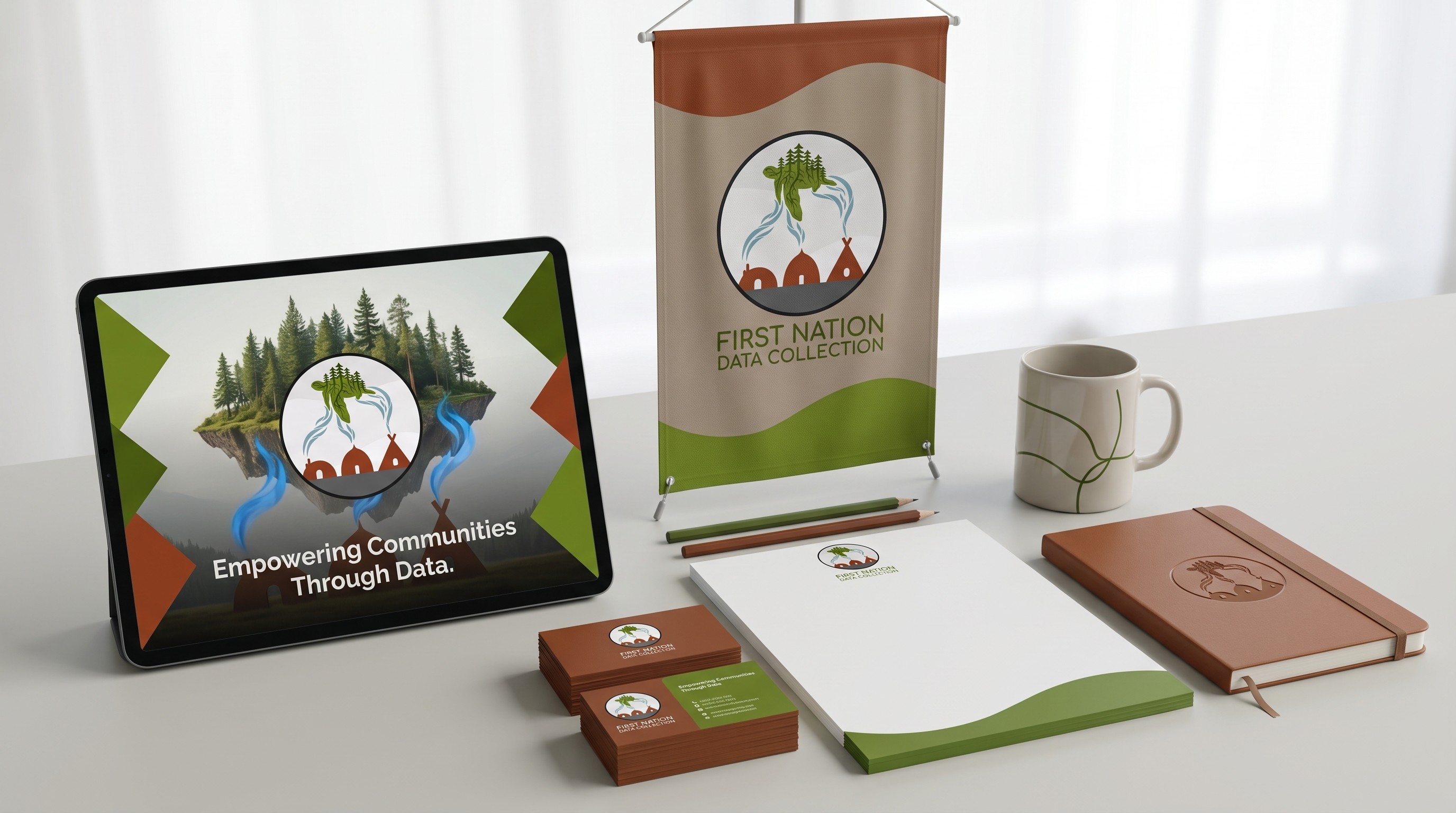
This project required a symbolic logo that would reflect the traditional architecture of Indigenous peoples and connect to the broader mission — a turtle above three traditional buildings (Tipi, Igloo, Wigwam), with smoke rising from the tops to symbolize the connection to Turtle Island and the rising awareness of the issue.
Approach:
To create a symbolic and meaningful logo, I focused on decolonizing data collection and visual storytelling that would reflect the traditional buildings of Indigenous peoples — the Tipi, Igloo, and Wigwam, and symbolize the connection to Turtle Island.
The storytelling element of the logo, smoke rising from the traditional buildings and leading into the turtle, was carefully crafted to symbolize the rising awareness of Indigenous homelessness and the need for community-based solutions.
Execution:
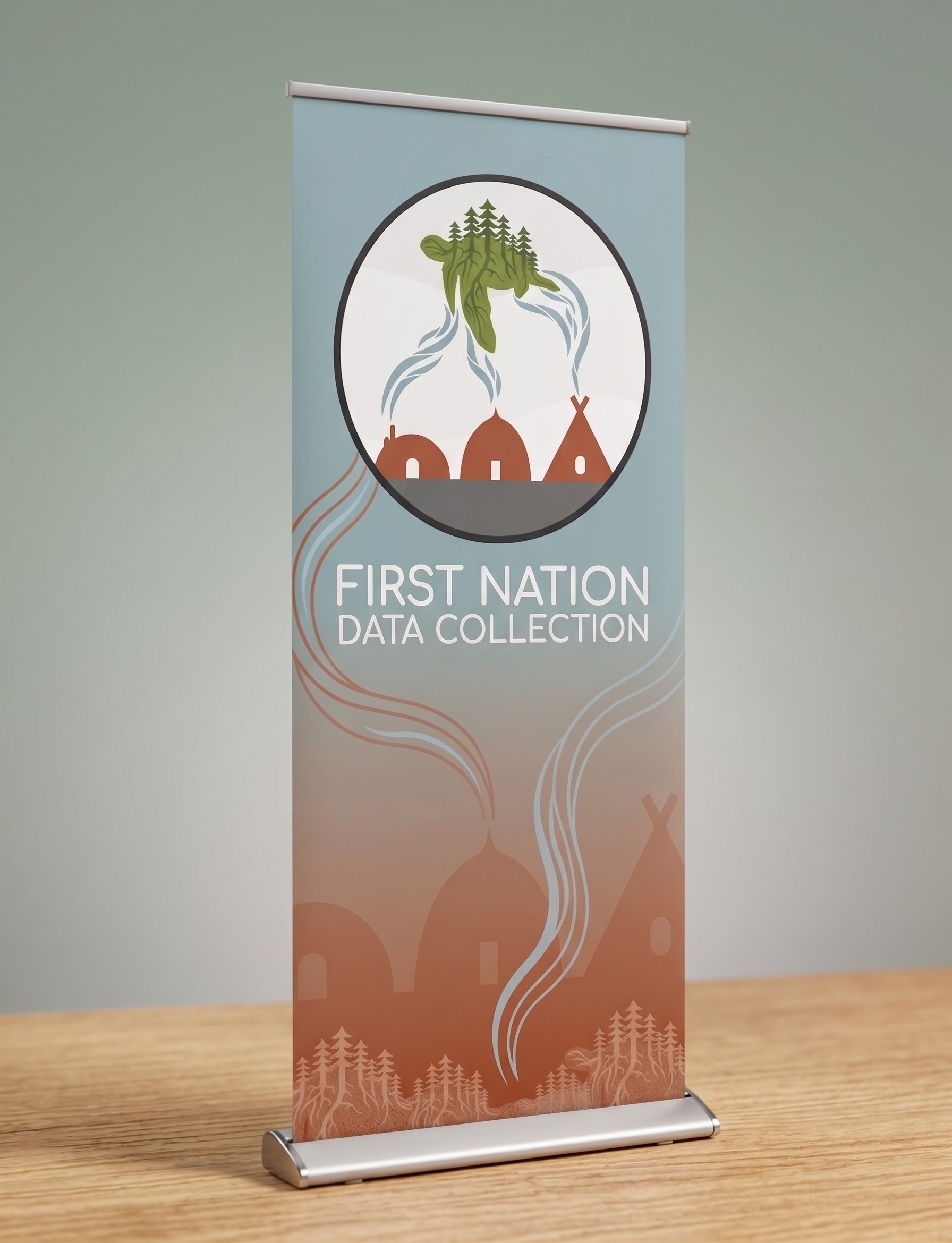
The logo features three traditional Indigenous buildings, the Tipi, Igloo, and Wigwam, with smoke rising from their tops to lead into a turtle symbolizing the connection to Turtle Island. This visual ties the project to its Indigenous roots while showcasing the modern data collection tool and its mission to support housing and community development.
The colours used were neutral and symbolic, reflecting the land and culture of First Nations communities, while still being approachable and relevant to a broader audience — including housing advocates, government agencies, and organizations working on Indigenous homelessness.
The design was simple yet powerful, allowing it to be used across digital, print, and community materials — a key consideration for both SEO and brand visibility.
Results:
The project resulted in a symbolic and meaningful logo that:
• Reflects traditional Indigenous architecture and the connection to Turtle Island, a strong cultural anchor.
• Improves the accuracy and relevance of First Nations houselessness data through community-informed survey design.
• Spreads awareness of the project to First Nations communities and broader audiences.
• A well-structured, visually resonant logo that speaks to both the mission and the identity of the project.
This project not only developed a powerful logo but also deepened the understanding of Indigenous homelessness through decolonized data collection, a key outcome for both Indigenous communities and organizations working on this issue.